
On Monday night, we held an amazingly well-attended webinar- “Police Diversion- Lessons from Overseas”. Thank you to all those who attended for your insightful questions and curiosity! We were really overwhelmed by your engagement and enthusiasm. The chat was going off!
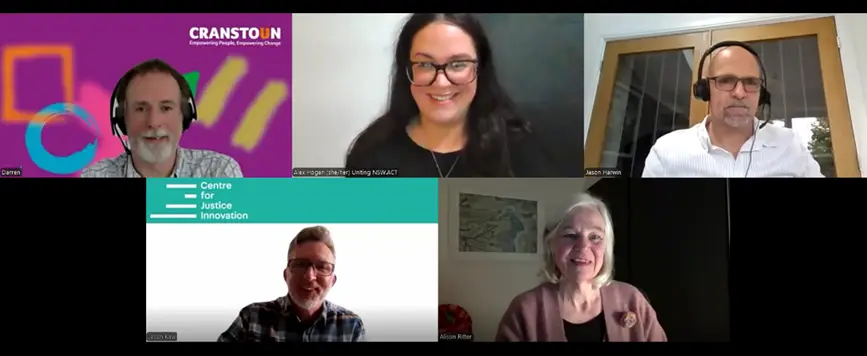
We were lucky enough to hear from Professor Alison Ritter from the Drug Policy Modelling Program (DPMP) at UNSW to explore police diversion in NSW and Australia- clarifying that whilst police Diversion is not decriminalisation, it is a pragmatic step forward in our current policy landscape.
Exploring our current Early Drug Diversion Initiative (EDDI), she discussed its critical limitations, including its discretionary nature, the current two-strike policy, and exclusions based on drug type and quantity that don’t reflect a policy that supports the people who actually need it most.
Our UK Guests- former police officers Jason Harwin and Jason Kew, and Assistant Director of Criminal Justice Services at Cranstoun, Darren Nicholas shared incredible insights into the work done to build a new diversionary model in the UK, working from the complex and clunky frameworks of current drug charges to a streamlined, health and wellbeing-focused scheme.
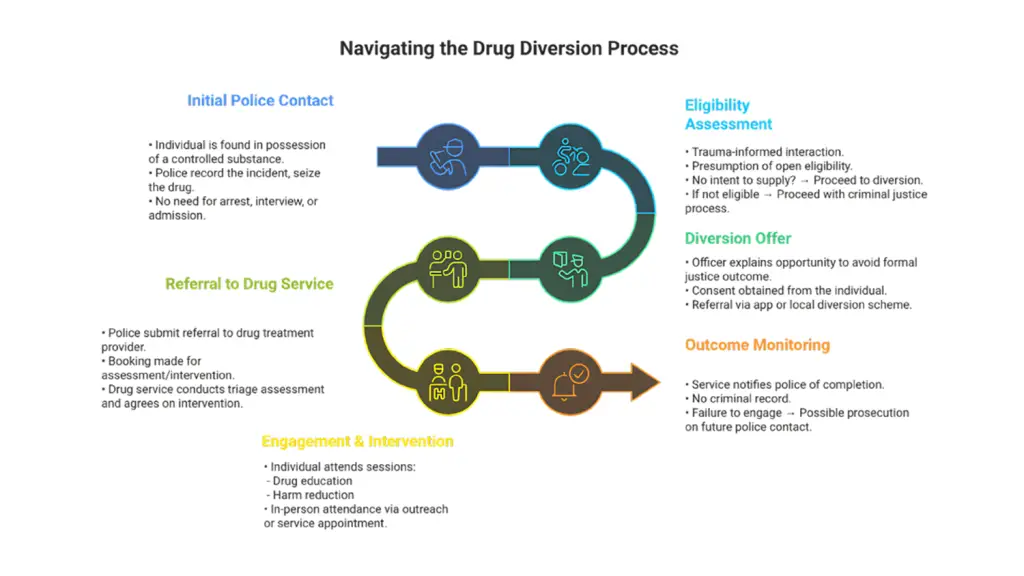
One of the programs outlined known as DIVERT, which has been implemented in 3 areas across England (West Midlands, West Mercia and Staffordshire) allows police to use an app to directly support referrals to treatment, which works to avoid any formal justice outcomes and provide access to services to those who most need it within a few days, because we know any delays to care significantly reduces the potential positive outcomes, and keeps treatment retention high.
Since its creation, at least 4.25 hours of police time was saved per case- and with over 18000 referrals, that is a saving of at minimum 76,500 hours of police time.
Another great success from the program was the impact on disproportional charges and treatment, with culturally and linguistically diverse communities seeing significant reductions in charges due to the non-discretionary nature of the scheme.
Unfortunately, one of our guest speakers Brendan Cox from the United States was unable to attend the event. Looking into the future, we are aiming to undertake a similar webinar with perspectives from across North America, including our friends in Canada.
These learnings sparked a lively conversation about our future advocacy, and we look forward to continuing to learn from our international peers in the future.
If you missed the event- you can check out the video below.
Share What You Have Learned
As we reflect on these insights from successful drug law reforms from across the pond, we urge you to write to your MP to let them know that the evidence supports change- you can even send them the video of the event!
We make writing to your MP easy- use our 5-step guide on our website here!