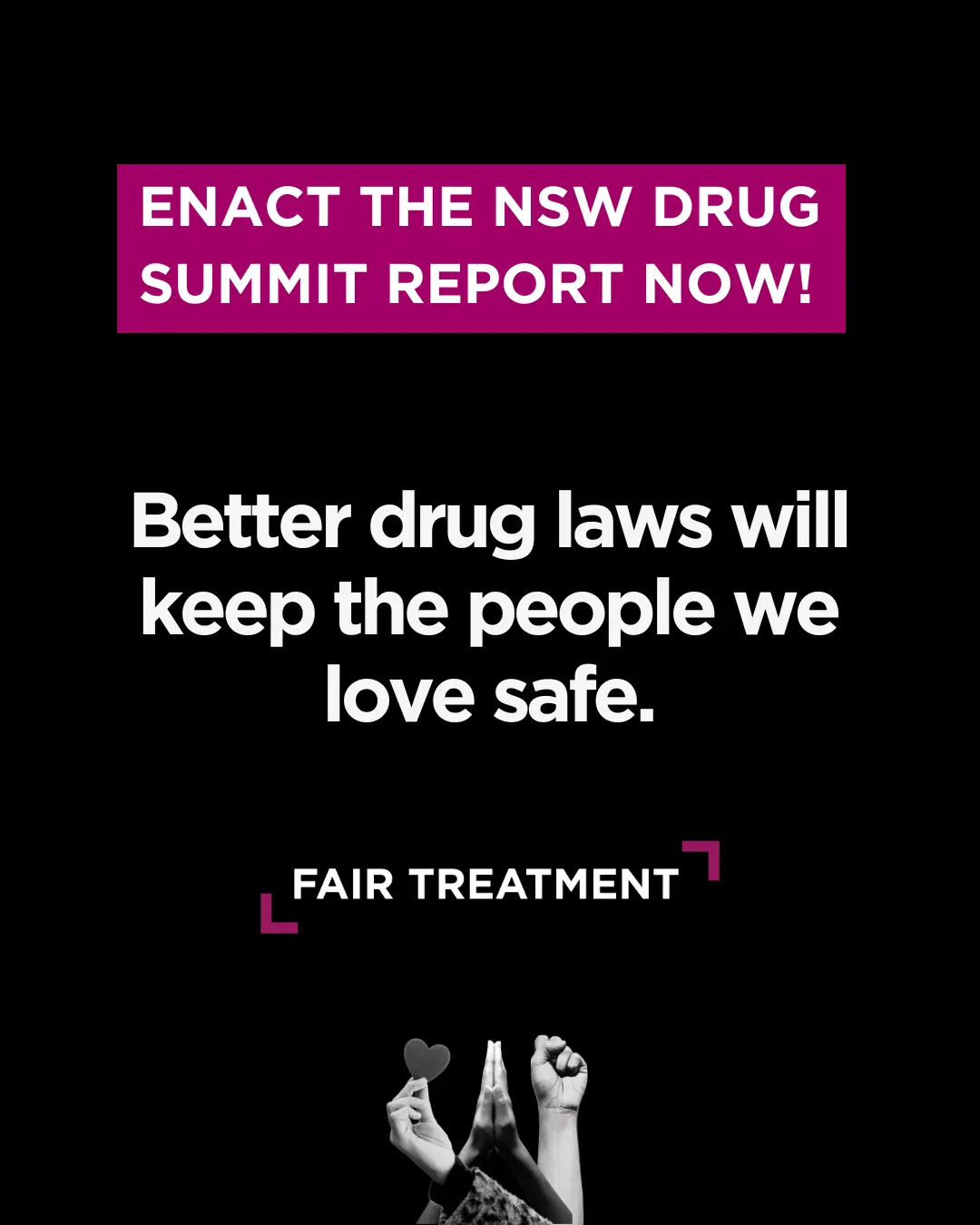
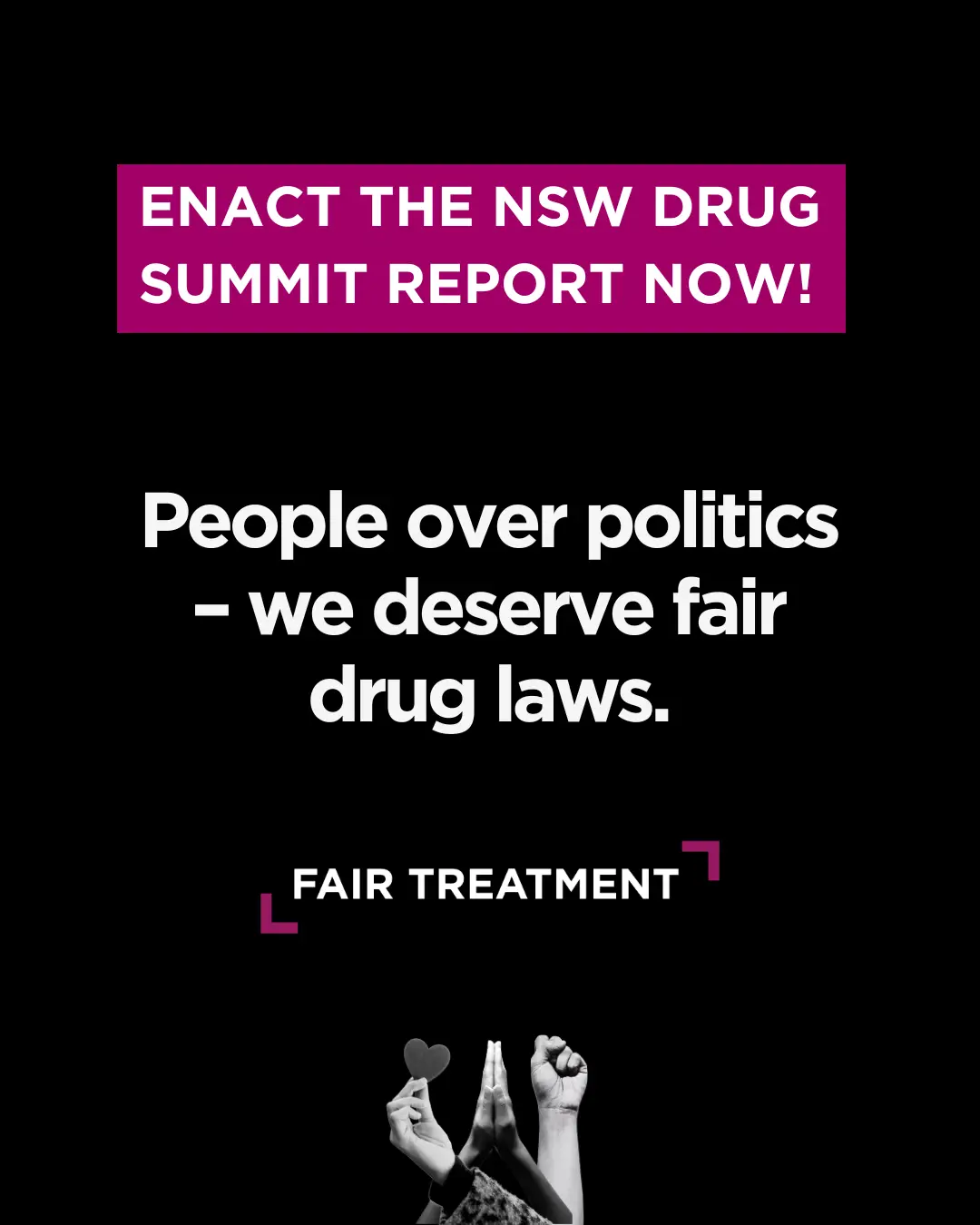
The Drug Summit Report was released on April 2nd. It outlines 56 Priority Actions to fix our broken drug laws and help keep the people we love safe.
The government has six months to respond – and a response is imminent.
The time is now to put the pressure on. Keep scrolling to learn how you can take action!
Our top 5 priority actions
- Improved Early Drug Diversion Initiative (EDDI), removing police discretion, strike system and multidrug exclusion
- Require Police and other first responders to carry Naloxone
- Change the current laws to allow more than one license to be issued for medically supervised injecting spaces in NSW
- An expansion of the current drug checking trial to include fixed site and mobile drug education and drug checking services
- Whole of Government Drug and Alcohol Strategy
Note: We welcome the robust list of priority actions detailed in the report. We acknowledge that other organisations and our partners will be advocating for their priorities. Above are the ones our campaign is prioritising for immediate consideration.
Get your Message on the Airwaves
Talkback radio is live, immediate, and powerful. Unlike letters, which sit on a page, a call to the radio puts your voice directly into people’s homes, cars, and workplaces. It’s everyday community members, not politicians, who shape the tone of these conversations.
- Be respectful and calm – radio hosts and producers will cut callers off if they sound aggressive or overly rehearsed.
- Stay positive – talk about the great action items from the report, and that you have high expectations for the government.
- Keep it short and clear – you may only get 30–60 seconds, so focus on one or two key points.
- Speak from the heart – personal stories or why the issue matters to you are always more powerful than statistics alone.
When you call in, you become part of the story. The more voices we get on the airwaves, the louder and clearer the message: we need fair drug laws that keep the people we love safe.
Find your local talkback station!
- ABC Sydney – 1300 222 702
- ABC Broken Hill – 1300 462 412
- ABC Central Coast – 1300 925 222
- ABC Central West – 1300 549 222
- ABC Coffs Coast – 1300 222 923
- ABC Illawarra – 1300 973 300
- ABC Mid North Coast – 1300 622 279
- ABC New England North West – 1300 648 222
- ABC Newcastle – 1300 331 233
- ABC North Coast – 1300 659 994
- ABC Riverina – 1300 221 027
- ABC South East NSW – 1300 810 222
- ABC Upper Hunter – 1300 104 222
- ABC Western Plains – 1300 221 071
- 2GB Sydney – 131 873
- 2SM – 13 12 69
- 2UE – 1300 002 954
- Gold FM – 13 55 22
- KIIS FM – 131 065
Keep the Story on the Front Page
Letters to the editor are one of the most effective ways to keep drug law reform in the public eye. Politicians and their staff monitor local papers closely, and they notice when communities are speaking up. Even a short letter shows that people in your area care, and when many voices write in, it builds a chorus that’s hard to ignore.
- Keep it short – Most letters are 150-200 words maximum. Try to make one clear point rather than cover everything.
- Make it personal – share where you are from and why you care- as a parent, worker, community member or a person with lived experience.
- Grab attention – Try to make your opening line one that makes a reader want to keep reading!
- High Expectations – Reiterate that you and other members of the community are watching and have high expectations for the response.
- Tailor your letter – Pay attention to the community that reads the newspaper, and check out what other people are writing to learn about what tone works.
Hold your MP Accountable
Our elected representatives need to know that we are watching. They have the power to push the government to act on the Drug Summit Report — but only if they feel pressure from their communities.
Whether you’ve never engaged or you’ve spoken to your MP before, we need to continue to show the people in power our community needs meaningful change.
Top Tips:
- Make it personal: share your story, explain why this matters to you, your family, your community.
- Name the changes you want – our priority list above can help guide you!
- Ask them to forward your message to the Health Minister and Premier, and to report back.
This should only take a few minutes – and you can do it here!
Need more help? Check out our resource pages to learn more!
Change the Conversation
The way we talk about drugs and people who use them shapes public opinion and political will. By challenging stigma and spreading real stories, we can shift the debate towards compassion, evidence, and reform.
- Use our Stigma Guide to shape how you talk about drug policy, treatment, and reform.
- Start having conversations about why you support drug law reform.
- Discuss in your networks – social media, friends and family, faith groups, workplaces.
Social Media
To keep the pressure up for change, we need to flood the internet with conversations about reform.
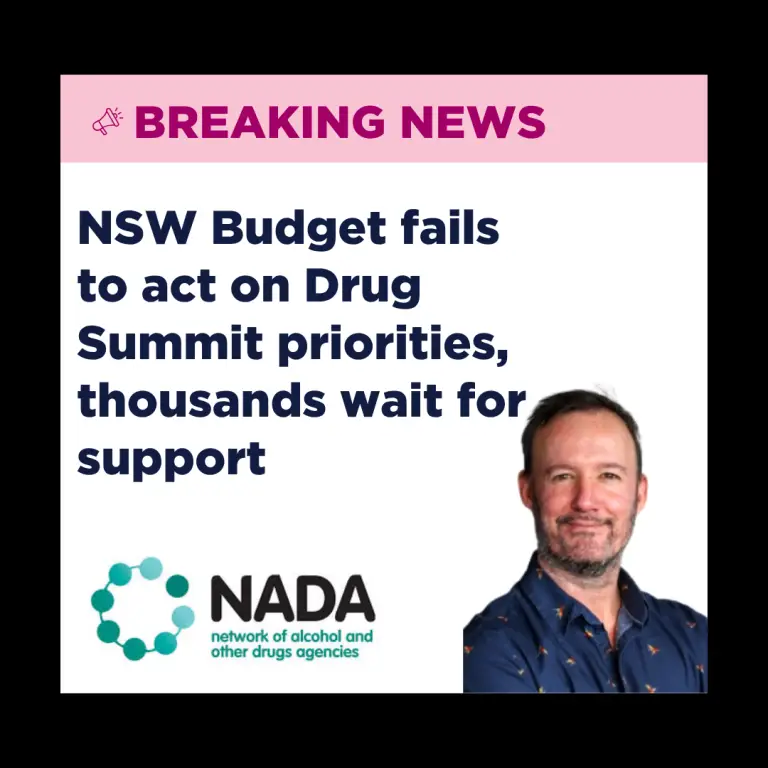
We have created social media tiles for you to share with your community- make sure when you share to tag Chris Minns and the Fair Treatment Campaign!